
The toe of a cricket bat is its most vulnerable part. It constantly makes contact with the ground, absorbs impact from yorkers, and is exposed to moisture from damp pitches. Players often debate whether to install a toe guard or leave the toe bare. Both approaches have distinct advantages and drawbacks, depending on playing conditions, style, and maintenance habits.
This extended article explores the long‑form pros and cons of each choice, giving you a detailed perspective to make the right decision for your bat.
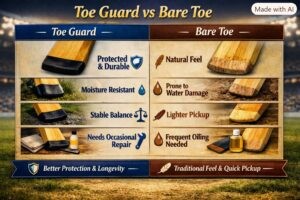
🛡️ Installing a Toe Guard — Advantages
1. Moisture Protection
- Toe guards act as a barrier against water absorption from wet pitches, grass, or indoor surfaces.
- Prevents swelling, discoloration, and rot.
- Essential during monsoon or winter training when dampness is unavoidable.
2. Shock Absorption
- Reduces the risk of toe cracks caused by repeated yorkers or low deliveries.
- Distributes impact across the guard rather than directly into the willow.
3. Durability and Longevity
- Extends the bat’s lifespan by protecting the most fragile part.
- Helps maintain balance and pickup over time.
4. Professional Finish
- Many modern bats come with factory‑fitted toe guards.
- Adds a polished look and improves resale value.
5. Consistency in Balance
- Prevents uneven drying or swelling at the toe, keeping the bat’s pickup stable.
⚖️ Installing a Toe Guard — Disadvantages
1. Added Weight
- Slightly increases toe mass, which can affect pickup.
- Wristy players who rely on bat speed may feel the difference.
2. Reduced Natural Feel
- Some players prefer the direct feedback of bare willow when playing low shots.
- Toe guards can dampen the tactile connection between bat and ball.
3. Maintenance Issues
- Poorly fitted guards may peel off, trapping moisture underneath.
- Requires occasional replacement or re‑gluing.
4. Difficult Replacement
- Removing old guards can damage the toe surface if not done carefully.
- Improper removal may expose raw willow to further risk.
🪵 Leaving the Toe Bare — Advantages
1. Natural Balance and Feel
- Preserves the bat’s original pickup and responsiveness.
- Ideal for players who rely on timing and wrist work.
2. Lighter Pickup
- No added weight at the toe, making the bat feel quicker in hand.
- Especially useful for shorter formats where bat speed matters.
3. Easy Maintenance
- Simple to clean, oil, and inspect for damage.
- No need to worry about peeling or trapped moisture.
4. Traditional Aesthetic
- Many players prefer the classic look of bare willow.
- Reflects old‑school craftsmanship and authenticity.
⚠️ Leaving the Toe Bare — Disadvantages
1. Moisture Risk
- Bare willow absorbs water quickly from damp pitches.
- This can lead to swelling, softening, and eventual rot.
2. Toe Cracks
- Vulnerable to yorkers and repeated low impacts.
- Toe cracks can spread upward, shortening the bat’s life.
3. Frequent Oiling Required
- Needs regular oiling to prevent drying.
- Maintenance is more demanding compared to toe‑guarded bats.
4. Shorter Lifespan
- Bare toes wear down faster, especially on abrasive surfaces.
- More prone to chips, dents, and warping.
🧠 Expert Recommendations
- Wet or humid conditions: Toe guard is strongly recommended.
- Dry or indoor play: Bare toes are fine with regular oiling.
- Hybrid option: Apply a thin layer of epoxy or clear sealant for lightweight protection without a full guard.
Professional players often use toe guards during international tours where pitch conditions vary, while traditionalists in dry climates may prefer bare toes for natural feel.
🏁 Conclusion: Protection vs Purity
Installing a toe guard offers practical protection against moisture and impact, extending the bat’s lifespan. Leaving the toe bare preserves the natural balance and feel, appealing to purists who value responsiveness.
The choice ultimately depends on your playing environment, style, and maintenance discipline. If you play on damp pitches or through monsoon seasons, a toe guard is essential. If you play mostly on dry tracks and value light pickup, bare willow may suit you better.
See More: How to Change a Cricket Bat Grip Using a Wooden Cone Without Ripping the Rubber?