
A quality cricket bat is a significant investment, and proper maintenance can add months or even years to its useful life. While regular knocking-in, oiling, and careful storage are essential, many players also use fiberglass tape, wood glue repairs, or twine wrapping to strengthen vulnerable areas and protect bats from further damage. When applied correctly, these methods can help extend the lifespan of a bat without significantly affecting its performance.
This guide explains how to safely use each technique, when to apply them, and common mistakes to avoid.
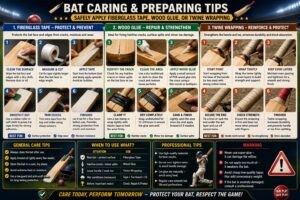
Why Cricket Bats Need Additional Protection
Cricket bats absorb tremendous force during play. Even premium English willow bats can develop cracks, seam marks, edge damage, or toe wear after repeated use. Factors that contribute to bat damage include:
- Yorker deliveries striking the toe
- Wet playing conditions
- Poor storage practices
- Repeated use with hard cricket balls
- Inadequate knocking-in
- Natural aging of the willow
Small surface cracks are normal and do not necessarily mean a bat has reached the end of its life. Early intervention with protective materials can prevent minor issues from becoming major structural failures.
Understanding Fiberglass Tape
Fiberglass tape is one of the most common bat protection products used by professional and amateur cricketers. It is designed to reinforce vulnerable areas while maintaining the bat’s natural feel.
Benefits of Fiberglass Tape
- Protects against surface cracking
- Reinforces edges
- Reduces splitting caused by impacts
- Helps contain existing hairline cracks
- Adds durability without significant weight gain
Fiberglass tape is particularly useful on bats frequently used in matches and practice sessions.
When to Apply Fiberglass Tape
Consider applying fiberglass tape if:
- Small cracks have appeared on the face or edges.
- The protective scuff sheet is damaged.
- The bat experiences frequent seam marks.
- Edge protection is required.
- You play on harder pitches.
Avoid applying fiberglass tape over major structural breaks, as professional repairs may be necessary.
Step-by-Step Guide to Applying Fiberglass Tape
Step 1: Clean the Bat Surface
Remove dust, dirt, and loose fragments from the damaged area. Use a dry cloth to wipe the surface thoroughly.
Step 2: Inspect for Structural Damage
Check whether cracks are shallow or deep. Minor cracks can be reinforced with tape, while severe splits may need glue repairs first.
Step 3: Cut the Tape
Measure the damaged area and cut an appropriate length of fiberglass tape. Ensure it extends beyond the crack to provide complete support.
Step 4: Apply Carefully
Place the tape smoothly across the surface. Avoid trapping air bubbles beneath the tape.
Step 5: Press Firmly
Use your fingers or a soft cloth to secure the tape uniformly.
Step 6: Check Adhesion
Make sure all edges are firmly attached and no sections are lifting.
Using Wood Glue for Crack Repairs
Wood glue is commonly used to repair minor cracks before they worsen. High-quality woodworking glue forms a strong bond while preserving most of the bat’s natural characteristics.
When Wood Glue Is Appropriate
Wood glue works well for:
- Hairline cracks
- Surface splits
- Edge cracks
- Toe cracks
It is not ideal for major fractures where willow sections have separated significantly.
How to Apply Wood Glue Safely
Step 1: Open the Crack Slightly
Gently flex the damaged area just enough to expose the crack.
Step 2: Apply Glue Evenly
Use a thin nozzle or toothpick to work glue deep into the crack.
Step 3: Remove Excess Glue
Wipe away surplus glue immediately to prevent uneven surfaces.
Step 4: Clamp the Area
Apply firm but controlled pressure using clamps or elastic bands.
Step 5: Allow Proper Drying
Leave the bat undisturbed until the glue has fully cured according to the manufacturer’s instructions.
Step 6: Sand Lightly
Once dry, lightly sand any rough areas before reapplying protective tape or a scuff sheet.
Advantages of Twine Wrapping
Twine binding has been used by bat repair specialists for decades. It is often applied around the toe or lower blade to strengthen repaired areas.
Key Benefits
- Provides structural reinforcement
- Reduces crack expansion
- Protects repaired sections
- Supports damaged toes
- Extends bat usability
Twine wrapping is especially effective when used alongside wood glue repairs.
How to Apply Twine Wrapping
Step 1: Repair Existing Damage
Before wrapping, fill cracks with wood glue and allow them to dry fully.
Step 2: Apply Adhesive
Spread a thin layer of adhesive around the area to be wrapped.
Step 3: Begin Wrapping
Start at the bottom and wrap the twine tightly and evenly.
Step 4: Maintain Consistent Tension
Ensure each loop is snug but not excessively tight.
Step 5: Secure the End
Tie off the final section and apply a small amount of adhesive to prevent loosening.
Step 6: Finish Neatly
Trim excess twine and allow everything to cure properly before using the bat again.
Common Mistakes to Avoid
Overusing Fiberglass Tape
Applying excessive layers can alter bat balance and performance.
Using Too Much Glue
Excess glue adds unnecessary weight and may affect the appearance of the bat.
Wrapping Too Tightly
Over-tightened twine can create pressure points that stress the willow.
Ignoring Moisture Damage
Protective repairs are less effective if moisture has already compromised the wood.
Delaying Repairs
Small cracks are easier and cheaper to repair than major splits.
Additional Bat Care Tips
To maximize the lifespan of your bat:
- Store it in a cool, dry environment.
- Avoid prolonged exposure to moisture.
- Continue regular oiling schedules.
- Use toe guards where appropriate.
- Inspect the bat after each match.
- Replace worn scuff sheets promptly.
- Avoid excessive knocking against hard surfaces.
When to Seek Professional Repair
While fiberglass tape, wood glue, and twine wrapping can be highly effective, some damage requires professional restoration. Consider expert repair if:
- Cracks extend deep into the blade.
- Large sections of willow are separating.
- The handle becomes loose.
- The toe suffers severe impact damage.
- The bat develops multiple structural fractures.
Professional bat makers often have specialized equipment that can restore a bat beyond what home repairs can achieve.
Conclusion
Fiberglass tape, wood glue, and twine wrapping are valuable tools for maintaining a cricket bat and extending its working life. Fiberglass tape provides surface protection, wood glue repairs minor cracks, and twine wrapping delivers additional reinforcement where needed. Applied correctly and combined with proper storage and routine maintenance, these techniques can significantly delay costly replacements while keeping your bat match-ready for longer.