
A Size 1 cricket bat is designed for young children who have moved beyond the beginner stage but are still developing the fundamental skills of batting. It provides a slightly longer blade and handle than a Size 0 bat while remaining lightweight enough for young players to maintain control and proper technique.
For many children, a Size 1 bat becomes their first “serious” cricket bat, used in school cricket, coaching sessions, and junior matches. Choosing the correct size at this stage is crucial because it helps build confidence, encourages sound batting mechanics, and makes learning the game more enjoyable.
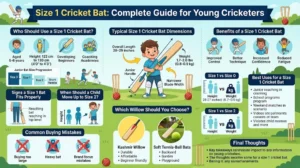
Who Should Use a Size 1 Cricket Bat?
A Size 1 bat is generally suitable for:
- Children aged 5 to 6 years
- Players approximately 122 cm to 130 cm (4’0″ to 4’3″) tall
- Beginners progressing from Size 0
- Young cricketers attending coaching academies
Height is usually a more reliable guide than age because children grow at different rates.
Typical Size 1 Cricket Bat Dimensions
Dimensions vary slightly between manufacturers, but a typical Size 1 bat features:
| Feature | Approximate Measurement |
|---|---|
| Bat Length | 28–29 inches |
| Weight | 1.7–2.0 lbs (0.8–0.9 kg) |
| Handle | Junior handle |
| Blade Width | Narrower than adult bats |
These dimensions help young players swing the bat comfortably while maintaining control.
Benefits of a Size 1 Cricket Bat
Improved Control
The lightweight design allows children to:
- Hold the bat properly
- Swing naturally
- Develop hand-eye coordination
Better Technique Development
Using the correct bat size encourages:
✅ Straight bat play
✅ Better backlift
✅ Balanced stance
✅ Proper follow-through
Oversized bats often interfere with these fundamentals.
Increased Confidence
A bat that is easy to swing makes it easier for children to:
- Hit the ball consistently
- Learn new shots
- Enjoy batting
Confidence is especially important during the early stages of cricket development.
Reduced Fatigue
Young arms and wrists can tire quickly when using heavy equipment.
A properly sized Size 1 bat helps prevent:
- Wrist strain
- Shoulder fatigue
- Loss of control
Which Willow Should You Choose?
For most Size 1 players, expensive professional-grade English willow is not necessary.
Kashmir Willow
Advantages:
✅ Durable
✅ Affordable
✅ Suitable for junior cricket
✅ Good value for beginners
Soft Tennis-Ball Bats
Suitable for:
- Backyard cricket
- Garden practice
- School playground games
These are often even lighter than standard junior bats.
Signs a Size 1 Bat Fits Properly
A correctly sized Size 1 bat should:
✅ Feel comfortable when lifted
✅ Allow free bat movement
✅ Not feel excessively heavy
✅ Reach around hip level when standing upright
The child should be able to play practice swings without struggling.
See More: Size 0 Cricket Bat
When Should a Child Move Up to Size 2?
A player may be ready for a Size 2 bat when:
- Height exceeds approximately 130 cm (4’3″)
- The bat begins to feel noticeably short
- Reach becomes limited
- The coach recommends a larger size
Never move up a size simply because of age alone.
Proper fit is more important.
Common Buying Mistakes
Buying Too Large
Many parents buy bigger bats hoping to save money long-term.
Unfortunately, oversized bats often:
❌ Slow bat speed
❌ Hurt technique
❌ Reduce confidence
Choosing Weight Over Control
Young players benefit more from control and bat speed than from extra weight.
Focusing on Brand Names
A correctly sized basic bat will almost always outperform an oversized premium model.
Size 1 vs Size 0
| Feature | Size 0 | Size 1 |
|---|---|---|
| Typical Age | 4–5 Years | 5–6 Years |
| Player Height | Up to 122 cm | 122–130 cm |
| Bat Length | Shorter | Slightly Longer |
| Reach | Lower | Improved |
| Playing Level | Beginner | Developing Beginner |
The transition provides greater reach without sacrificing control.
Size 1 vs Size 2
| Feature | Size 1 | Size 2 |
|---|---|---|
| Height Range | 122–130 cm | 130–137 cm |
| Weight | Lighter | Slightly Heavier |
| Reach | Moderate | Greater |
| Batting Power | Developing | Improved |
Moving too quickly to a Size 2 can negatively impact technique.
Best Uses for a Size 1 Cricket Bat
A Size 1 bat is ideal for:
- Junior cricket coaching
- School cricket programs
- Cricket academies
- Soft-ball cricket
- Introductory hard-ball cricket (with suitable protective equipment)
- Weekend junior matches
Junior Bat Size Progression
Most young cricketers progress through the following pathway:
Size 0
   ↓
Size 1
   ↓
Size 2
   ↓
Size 3
   ↓
Size 4
   ↓
Size 5
   ↓
Size 6
   ↓
Harrow
   ↓
Short Handle
Each stage supports growing strength, height, and technical development.
Final Thoughts
A Size 1 cricket bat is the ideal choice for children aged approximately 5 to 6 years or between 122 cm and 130 cm tall. It offers the perfect balance of control, comfort, and maneuverability, allowing young players to develop proper batting technique without being hindered by excessive weight or length. While it may be tempting to buy a larger bat for future growth, selecting the correct size helps young cricketers build confidence, improve bat speed, and learn the game the right way.
For parents, coaches, and academy players, the goal should always be simple: choose the bat that the child can swing comfortably today rather than the one they might grow into tomorrow. A well-fitted Size 1 bat lays the foundation for long-term cricket development and a lifelong love of the game. 🏏
See More: Size 0 Cricket Bat