
Few things make a cricketer more nervous than seeing dark rain clouds while carrying an expensive English willow bat. Whether it’s a sudden shower during a match, a damp outfield, wet practice nets, or simply leaving a bat in a moist environment, water can be one of the biggest enemies of cricket bat performance and longevity.
Many players assume a little moisture won’t matter. Unfortunately, English willow is a natural material that reacts quickly to water absorption. Even small amounts of moisture can alter the bat’s weight, balance, fiber structure, and long-term durability. In severe cases, repeated exposure to damp conditions can contribute to cracking, swelling, and premature deterioration.
Understanding what happens when a bat gets wet and knowing the correct recovery steps can potentially save hundreds of dollars in replacement costs.
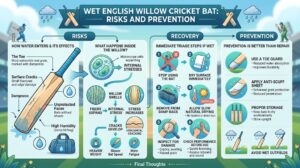
Why English Willow Hates Water
English willow is prized because it offers an exceptional combination of:
- Lightweight performance
- Excellent rebound
- Natural flexibility
- Shock absorption
- Superior sweet spot characteristics
However, these same properties make it vulnerable to moisture.
English willow contains thousands of microscopic cells and fibers that naturally absorb water when exposed to damp conditions.
When moisture enters the wood:
✅ The fibers swell
✅ The bat becomes heavier
✅ Internal stresses develop
✅ Performance characteristics change
The longer the exposure, the greater the potential damage.
How Water Enters a Cricket Bat
Many players think moisture only becomes a problem when the entire bat gets soaked.
In reality, water often enters through several routes.
The Toe
The toe is usually the most vulnerable area.
When players stand on damp grass:
- Moisture transfers from the ground
- Water enters exposed end grain
- Fibers absorb moisture rapidly
This is one reason many modern players use toe guards.
Surface Cracks
Even tiny cracks can allow moisture penetration.
Water often enters through:
- Grain cracks
- Edge cracks
- Surface fractures
The damage may occur beneath the visible surface.
Unprotected Faces
Bats without anti-scuff sheets may absorb moisture directly through the blade face.
Repeated exposure increases risk.
Humidity
Even without direct rain exposure, high humidity can gradually affect moisture content.
This is especially important during:
- Monsoon seasons
- Damp storage conditions
- Poorly ventilated equipment bags
What Happens Inside the Willow?
When moisture enters the wood, the willow fibers expand.
This expansion creates pressure within the structure of the bat.
At first, the effects may seem minor:
- Slightly heavier pickup
- Damp surface
- Minor swelling
The real concern is what happens later.
When the bat dries, the fibers contract.
Repeated swelling and contraction cycles place stress on the willow.
Over time, this can weaken structural integrity.
See More: Power-Hitter vs Anchor Bats
Why Wet Bats Become Heavier
One of the first things players notice is increased weight.
Water absorption directly increases mass.
A bat that normally feels perfectly balanced may suddenly feel sluggish.
Consequences include:
✅ Slower bat speed
✅ Reduced control
✅ Lower maneuverability
✅ More fatigue
Even relatively small amounts of absorbed moisture can noticeably affect pickup.
Does Water Affect Bat Performance?
Absolutely.
The sweet spot characteristics of willow depend heavily on:
- Fiber structure
- Compression
- Moisture balance
Excess moisture interferes with these properties.
Players may experience:
- Reduced rebound
- Less responsive feel
- Dull impact sensation
- Lower energy transfer
The bat often feels “dead” compared with its normal performance.
The Link Between Moisture and Horizontal Cracking
One of the most damaging effects of moisture exposure is the increased risk of horizontal cracks.
Unlike traditional vertical grain cracks, horizontal cracks often run across the face of the bat.
These cracks can be particularly concerning because they interrupt multiple grains simultaneously.
Why Horizontal Cracks Form
When wet willow absorbs moisture:
FIBERS EXPAND
↓↓↓↓↓↓↓↓↓↓↓
WILLOW SWELLS
↓↓↓↓↓↓↓↓↓↓↓
INTERNAL STRESS INCREASES
↓↓↓↓↓↓↓↓↓↓↓
CRACKS MAY DEVELOP
As the bat later dries:
- Fibers shrink
- Stresses redistribute
- Weak areas become vulnerable
The resulting stress pattern can contribute to horizontal cracking.
Why Damp Outfields Are Dangerous
Many players focus on rain while ignoring wet grass.
However, damp outfields may expose bats to moisture for much longer periods.
Every time the bat rests on the ground:
- Moisture contacts the toe
- Water absorption occurs
- Swelling risk increases
Repeated exposure can gradually damage the toe area.
Common Signs of Water Damage Bat
Heavier Pickup
A bat feels noticeably heavier than usual.
Toe Swelling
The toe appears enlarged or uneven.
Raised Grains
Grain fibers become more prominent.
Surface Softness
The face may feel softer than normal.
New Cracks
Particularly horizontal or unusual fracture patterns.
Reduced Ping
The bat feels less responsive during impact.
Can Water Damage Be Reversed?
Sometimes.
Minor moisture exposure may have limited long-term consequences if treated properly.
However:
- Severe water damage
- Repeated exposure
- Extended saturation
can permanently affect the willow.
Once significant cracking develops, complete recovery is unlikely.
The goal is rapid intervention.
Immediate Triage Steps If Your Bat Gets Wet
Quick action matters.
The first few hours are often critical.
Step 1: Stop Using the Bat
This is the most important rule.
Do not continue batting with a wet bat.
Every impact places additional stress on swollen fibers.
Continuing to play may greatly increase cracking risk.
Step 2: Dry the Surface Immediately
Use a clean, dry towel.
Gently remove:
- Rainwater
- Surface moisture
- Mud
- Dirt
Do not scrub aggressively.
The goal is moisture removal, not cleaning.
Step 3: Remove From Damp Equipment Bags
A wet kit bag creates a humid environment.
Take the bat out immediately.
Allow air circulation around the blade.
Step 4: Allow Slow Natural Drying
This is critical.
Many players make the mistake of forcing the drying process.
Never place the bat:
❌ Against a radiator
❌ Near a heater
❌ In direct sunlight for extended periods
❌ In front of high-temperature fans
Rapid drying can create additional stress.
Instead:
✅ Store indoors
✅ Use room temperature
✅ Ensure gentle airflow
✅ Allow gradual drying
Step 5: Inspect for Damage
Once dry, examine:
- Toe
- Edges
- Face
- Grain lines
Look for:
✅ New cracks
✅ Swelling
✅ Grain lifting
✅ Structural changes
Document any issues early.
Step 6: Check Performance Before Match Use
Before returning the bat to competition:
- Conduct gentle knocking
- Assess rebound
- Check sound
- Evaluate feel
If significant performance changes occur, repairs may be required.
Should You Re-Oil After Getting Wet?
Sometimes.
If the bat has fully dried and appears overly dry afterward, light maintenance oiling may help restore moisture balance.
However:
❌ Do not apply oil to a wet bat
❌ Do not over-oil damaged areas
✅ Wait until the bat is completely dry
How Toe Guards Help
Toe guards are increasingly popular because they reduce moisture intrusion through the toe.
Benefits include:
✅ Reduced water absorption
✅ Better durability
✅ Improved toe protection
✅ Longer bat lifespan
They cannot make a bat waterproof, but they significantly reduce risk.
How Anti-Scuff Sheets Help
Anti-scuff sheets provide additional surface protection.
Advantages include:
- Reduced moisture penetration
- Better grain protection
- Enhanced durability
Many professionals use them for exactly this reason.
Prevention Is Better Than Repair
The safest approach is prevention.
Before playing in uncertain weather:
Use a Toe Guard
One of the most effective moisture barriers.
Apply Quality Protection
Anti-scuff sheets add another layer of defense.
Store Correctly
Keep bats in dry environments.
Avoid Standing the Bat on Wet Grass
Small habits often make a big difference.
Final Thoughts
Playing cricket in wet conditions can expose even the best English willow bat to significant risk. Water absorption increases weight, alters pickup, affects performance, and places stress on the willow fibers that can eventually contribute to swelling, structural weakness, and horizontal cracking. Because English willow relies on a carefully balanced moisture content for optimal performance, excessive water disrupts the very characteristics that make a cricket bat feel lively and responsive.
The good news is that quick action can often minimize the damage. If a bat gets wet, stop using it immediately, dry the surface carefully, allow it to dry naturally at room temperature, and inspect it thoroughly before returning it to play. Combined with preventative measures such as toe guards, anti-scuff sheets, and proper storage, these steps can help protect a valuable bat from one of the most common and costly threats in cricket. Ultimately, treating moisture seriously can add years to a bat’s lifespan and preserve the performance that players work so hard to maintain.
See More: Why Women Need Specialized Cricket Bats?