
Choosing a cricket bat is about more than picking a popular brand or the highest-grade willow. One of the most important factors affecting your batting performance is the bat’s weight. A bat that feels perfect in your hands can improve timing, control, confidence, and shot-making, while a bat that is too heavy or too light can negatively impact your game.
Whether you’re a beginner learning the basics, a club cricketer building an innings, or an aggressive batter looking to clear the boundary ropes, understanding bat weight is essential. The right weight allows you to play naturally, maximize your strengths, and stay comfortable throughout an innings.
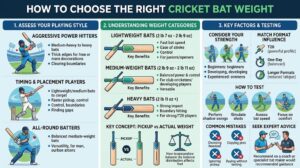
Why Bat Weight Matters
The weight of a cricket bat influences almost every aspect of batting:
- Bat speed
- Shot timing
- Power generation
- Maneuverability
- Fatigue levels
- Confidence at the crease
- Ability to play different shot types
Many players assume that heavier bats automatically hit the ball farther. While a heavier bat can generate more momentum, power comes from a combination of bat speed, timing, and technique. An overly heavy bat can actually reduce performance if it slows your swing or tires you out.
The ideal bat is not necessarily the heaviest or lightest option available. It is the bat that feels balanced and comfortable in your hands.
Start by Assessing Your Playing Style
Before looking at specific weights, you should evaluate how you bat.
Aggressive Power Hitters
Players who enjoy attacking bowling, playing lofted drives, and clearing boundaries often prefer slightly heavier bats. A heavier blade can help generate greater momentum through the ball and provide a solid striking feel.
Power hitters usually benefit from:
- Medium-heavy to heavy bats
- Thick edges
- Larger sweet spots
- Substantial profiles
However, the bat still needs to be manageable. If you cannot maintain bat speed, the added weight becomes a disadvantage.
Timing and Placement Players
Not every run comes from brute force. Many successful batters rely on placement, timing, and quick hands.
These players often prefer:
- Lightweight or medium-weight bats
- Faster pickup
- Easier maneuverability
- Better control against pace and spin
The ability to react quickly and place the ball into gaps can be more valuable than having a few extra ounces of willow.
All-Round Batters
Most amateur cricketers fall somewhere between these two categories. They need a bat that provides both control and power.
A balanced medium-weight bat is often the safest choice, offering versatility for all formats of cricket.
Understanding Cricket Bat Weight Categories
Although exact classifications vary between manufacturers, cricket bats generally fall into three broad categories.
Lightweight Bats
Weight Range: Approximately 2 lb 7 oz to 2 lb 9 oz
Benefits:
- Faster bat speed
- Easier stroke play
- Improved control
- Less fatigue during long innings
- Ideal for younger players
Best For:
- Touch players
- Opening batters
- Junior cricketers
- Players who rely on timing
Medium-Weight Bats
Weight Range: Approximately 2 lb 9 oz to 2 lb 11 oz
Benefits:
- Balanced power and control
- Comfortable for most players
- Suitable for multiple formats
- Versatile shot-making options
Best For:
- Club cricketers
- Developing players
- All-round batters
- Most recreational players
Heavy Bats
Weight Range: Approximately 2 lb 11 oz to 3 lb and above
Benefits:
- Strong presence at impact
- Excellent boundary-hitting potential
- Powerful feel through the ball
Best For:
- Strong players
- Aggressive batters
- T20 specialists
- Advanced players with good technique
The Importance of Pickup Versus Actual Weight
One of the biggest misconceptions in cricket equipment is focusing only on a bat’s actual weight.
Two bats can weigh exactly the same but feel completely different in the hands.
This is because of pickup, which refers to how heavy or light the bat feels when you hold and swing it.
Factors affecting pickup include:
- Handle design
- Weight distribution
- Spine height
- Profile shape
- Balance point
A well-balanced 2 lb 11 oz bat may feel lighter than a poorly balanced 2 lb 9 oz bat.
For this reason, experienced players often prioritize pickup over reading the number printed on the bat sticker.
Consider Your Physical Strength
Your physical build and strength should play a significant role in bat selection.
Beginners
New players should generally start with lighter bats.
Benefits include:
- Easier swing mechanics
- Better technique development
- Reduced fatigue
- Improved confidence
Using a bat that is too heavy can encourage poor habits and restrict proper shot execution.
Developing Players
As strength and technique improve, players can gradually experiment with slightly heavier bats.
Many cricketers naturally move into the medium-weight category as they mature and gain confidence.
Strong and Experienced Players
Advanced batters with developed forearms, wrists, and shoulders may benefit from heavier bats because they can maintain high bat speed despite the additional mass.
Even then, comfort remains the priority.
Junior Cricket Bat Weight Guide
Young players should always prioritize manageable bat weights over trying to emulate professional cricketers.
Using an oversized or overweight bat can lead to:
- Poor technique
- Slow bat speed
- Wrist strain
- Shoulder fatigue
- Reduced confidence
The correct junior bat size combined with an appropriate weight allows young players to develop proper fundamentals and enjoy the game.
Parents should choose a bat that the player can comfortably pick up, backlift, and swing repeatedly without difficulty.
Match Format Can Influence Bat Choice
Different formats sometimes favor different bat characteristics.
T20 Cricket
T20 batters often prefer bats with:
- Thick edges
- Powerful profiles
- Slightly heavier weight
- Maximum hitting potential
One-Day Cricket
ODI-style batting requires a balance between power and endurance.
Medium-weight bats are often ideal.
Longer Formats
Test and multi-day cricket reward patience, concentration, and technique.
Many players choose slightly lighter bats to reduce fatigue during long innings.
A bat that feels comfortable after 100 balls is often more valuable than one that feels powerful for 20 balls.
How to Test Different Bat Weights
One of the best ways to find your ideal bat weight is through practical testing.
Perform Shadow Swings
Pick up the bat and play several imaginary shots.
Ask yourself:
- Does the bat feel comfortable?
- Does it move naturally?
- Can you complete a full swing without strain?
Simulate Match Conditions
Try cover drives, pulls, cuts, and defensive strokes.
A bat that feels good during one swing may feel very different after fifty swings.
Assess Bat Speed
Notice how quickly the bat travels through the swing.
Fast bat speed often translates into better timing and greater scoring opportunities.
Focus on Comfort
The correct bat should feel like an extension of your arms rather than a piece of equipment you are fighting against.
Common Mistakes When Choosing Bat Weight
Choosing the Heaviest Bat Available
Many players believe heavier automatically means better.
In reality, a bat that is too heavy can:
- Slow your reactions
- Reduce bat speed
- Increase fatigue
- Hurt timing
Copying Professional Players
Professional cricketers possess exceptional strength and conditioning.
A bat that works for an international player may be completely unsuitable for an amateur cricketer.
Ignoring Pickup
The number on the scale tells only part of the story.
Always judge how the bat feels in your hands.
Buying Without Testing
Whenever possible, physically hold and swing multiple bats before making a decision.
Seek Expert Advice
If you’re uncertain about the best weight, speak to:
- Cricket coaches
- Experienced players
- Specialist bat makers
- Cricket equipment retailers
Their experience can help identify the most suitable weight range based on your:
- Skill level
- Physical build
- Batting position
- Playing style
- Goals
Expert advice combined with personal testing often leads to the best decision.
Final Thoughts
Choosing the right cricket bat weight is one of the most important equipment decisions any batter can make. The perfect bat should complement your playing style, match your physical strength, and feel comfortable throughout an innings. While heavier bats may offer additional power and lighter bats can improve bat speed, there is no universal “best” weight.
The ideal cricket bat is the one that helps you play your natural game with confidence. By assessing your batting style, understanding pickup and balance, considering your strength, testing multiple weight options, and seeking expert guidance, you can find a bat that maximizes performance and enjoyment every time you step onto the field.
See More: Lightweight vs Heavyweight Cricket Bats