
Introduction
Buying your first cricket bat is one of the most exciting moments in a cricketer’s journey. A cricket bat is more than just a piece of equipment. It becomes your companion at the crease, helping you develop confidence, improve technique, and enjoy the game. However, with so many bat sizes, weights, willow types, profiles, and brands available, choosing the right bat can feel overwhelming for beginners.
Many new players make the mistake of selecting a bat based solely on appearance, brand name, or professional endorsements. While these factors may seem important, the perfect bat is the one that matches your body size, skill level, playing style, and budget.
This comprehensive guide covers everything beginner cricket players need to know before purchasing a cricket bat, helping you make a smart investment that supports your development and enjoyment of the game.
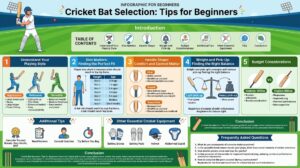
1. Understand Your Playing Style
Even if you’re new to cricket, it helps to think about how you naturally approach batting. Your style can influence what type of bat feels most comfortable in your hands.
Aggressive Batsmen
Aggressive players enjoy attacking bowlers, scoring boundaries, and playing powerful strokes. They often prefer bats designed to maximize power.
Recommended Bat Characteristics
- Large sweet spot
- Thick edges
- Heavier overall weight
- Strong profile designed for power hitting
Ideal For
- Big sixes and fours
- Front-foot attacking shots
- Dominating bowlers
A heavier bat can generate significant hitting power when the ball connects with the sweet spot. However, beginners must ensure they can comfortably handle the extra weight without sacrificing technique.
Key Features
🔴 Bat Characteristics: Larger sweet spot, thicker edges, heavier weight
🔴 Playing Style: Power-hitting, aggressive strokes, boundary scoring
Defensive Batsmen
Some players naturally focus on staying at the crease, building innings, and minimizing risks. Defensive batters prioritize control rather than raw power.
Recommended Bat Characteristics
- Lightweight pick-up
- Thinner blade
- Enhanced control
- Easy maneuverability
A lighter bat allows for precise stroke-making and easier defensive techniques, helping beginners build a solid foundation.
Key Features
🔴 Bat Characteristics: Lighter pick-up, thinner blade
🔴 Playing Style: Defensive batting, patience, wicket preservation
Versatile Batsmen
Most beginner players eventually become versatile batters. They adapt according to match situations, bowling conditions, and team requirements.
Recommended Bat Characteristics
- Balanced weight distribution
- Medium-thickness profile
- Decent-sized sweet spot
- Good combination of control and power
These bats provide flexibility and help beginners develop all aspects of their game.
Key Features
🔴 Bat Characteristics: Balanced weight, medium thickness, large sweet spot
🔴 Playing Style: Adaptable batting, attacking and defensive play
2. Size Matters: Finding the Perfect Fit
One of the biggest mistakes beginners make is purchasing a bat that is either too large or too small.
A bat that fits properly allows you to:
- Play shots comfortably
- Develop correct batting technique
- Improve control
- Reduce fatigue
- Minimize injury risk
A common guideline is that when standing upright, the top of the bat should reach approximately your hip bone.
However, several factors should also be considered.
Height
Taller players may require longer bats, while shorter players generally perform better with smaller bat sizes.
Buying an oversized bat simply because it looks more impressive often leads to poor technique and slower bat speed.
Arm Length
Players with longer arms sometimes feel more comfortable using slightly longer bats.
However, the bat should never feel awkward or extend excessively when held naturally.
Consider:
🔴 Longer Arms: May benefit from additional reach
🔴 Comfort First: Ensure the bat feels natural throughout the swing
Playing Preference
Some players enjoy the control offered by slightly shorter bats, while others prefer the reach and leverage of longer models.
The best approach is to physically test several options before making a decision.
Personal Comfort
Ultimately, comfort outweighs every measurement chart.
Ask yourself:
- Can I pick the bat up easily?
- Does the bat feel balanced?
- Can I shadow-bat naturally?
- Do my hands feel comfortable on the handle?
If the answer is yes, you’re likely close to finding the right fit.
See More: T20 vs ODI vs Test Cricket Bats: Which Bat Suits Your Game?
3. Handle Shape: Comfort and Control Matter
A bat’s handle significantly influences grip, shot control, and overall feel.
Many beginners overlook this feature, but handle shape can affect confidence at the crease.
There are three primary handle styles.
Oval Handle
Oval handles are commonly used by players who rely heavily on their top hand.
Benefits
- Better control
- Reduced twisting upon impact
- Clear feedback from the bat
Best For
- Front-foot players
- Technical batsmen
- Top-hand dominant players
Round Handle
Round handles have been popular for generations.
Benefits
- Greater bottom-hand involvement
- Enhanced wrist movement
- Flexibility during shot-making
Best For
- Back-foot players
- Wristy stroke-makers
- Players who like flicks and cuts
Semi-Oval Handle
The semi-oval handle combines elements of both designs.
Benefits
- Balanced feel
- Good control
- Suitable for multiple batting styles
Best For
- Beginners
- All-round batters
- Developing players
Many coaches recommend semi-oval handles for beginners because they provide versatility while skills continue developing.
4. Weight and Pick-Up: Finding the Right Balance
Bat weight is one of the most important factors when purchasing your first cricket bat.
Understanding Bat Weight
A heavier bat generally offers:
✅ More power
✅ Greater momentum
✅ Better boundary-hitting potential
However, it can also:
❌ Reduce bat speed
❌ Tire players quickly
❌ Make technique development harder
Understanding Pick-Up
Interestingly, two bats with identical weights may feel completely different.
This is where “pick-up” becomes important.
Pick-up refers to how heavy or light a bat feels during a swing.
Light Pick-Up
Benefits include:
- Faster bat speed
- Easier maneuverability
- Better shot control
- Reduced fatigue
Heavy Pick-Up
Benefits include:
- Increased power
- Stronger impact
- Better boundary potential
What Should Beginners Choose?
For most beginners, coaches recommend a lighter bat with an easy pick-up.
A light bat allows players to:
- Learn proper technique
- Develop timing
- Increase bat speed
- Build strength naturally
As your skills improve, you can transition to a heavier bat if needed.
5. Budget Considerations
A cricket bat is an investment.
While buying the cheapest bat available might save money initially, it can negatively impact your playing experience.
The goal is finding the best value rather than simply the lowest price.
Kashmir Willow vs English Willow
Kashmir Willow
Kashmir willow bats are ideal for beginners because they offer:
✅ Affordability
✅ Durability
✅ Strong construction
✅ Excellent value for money
Many first-time players begin their cricket journey with Kashmir willow.
English Willow
English willow is the premium material used for high-performance cricket bats.
Benefits include:
✅ Better responsiveness
✅ Improved ping
✅ Lighter feel
✅ Professional-level performance
However, they are significantly more expensive.
For beginners, a quality Kashmir willow bat often makes more financial sense until skills advance.
Buy from Reputable Sellers
Always purchase from trusted sources such as:
- Established cricket retailers
- Reputable brands
- Bat specialists
- Professional bat repair experts
This helps ensure:
- Genuine products
- Quality craftsmanship
- Better customer support
- Improved reliability
Additional Tips for Beginners
Consider Trusted Brands
Established manufacturers often provide better quality control and performance consistency.
Popular brands include:
- Gray-Nicolls
- MRF
- Kookaburra
- Slazenger
These brands have earned strong reputations across all levels of cricket.
Read Reviews
Online reviews can offer valuable real-world insights.
Look for feedback about:
- Durability
- Balance
- Pick-up
- Sweet spot performance
- Value for money
Consult Coaches and Experienced Players
Experienced cricketers can often recommend bats that fit your:
- Age
- Ability level
- Physical strength
- Batting style
A coach’s advice can save you from making expensive mistakes.
Try Before You Buy
Nothing replaces physically holding a cricket bat.
Before purchasing:
✅ Practice a few shadow strokes
✅ Test multiple weights
✅ Compare handle shapes
✅ Feel the balance
✅ Check comfort levels
The bat that feels best in your hands is usually the right choice.
Other Essential Cricket Equipment
Buying a bat is only part of becoming match-ready. Several other pieces of equipment are equally important.
1. Batting Gloves
Batting gloves provide:
- Better grip
- Hand protection
- Shock absorption
- Improved comfort
Choose gloves that fit snugly without restricting movement.
2. Batting Pads
Pads protect your legs from impact.
When buying pads:
- Ensure proper sizing
- Check comfort levels
- Match the protection level to the type of cricket being played
Pads that are too large or too small can affect mobility and safety.
3. Cricket Helmet
A helmet is arguably the most important safety item for any batter.
When selecting a helmet:
- Ensure proper fit
- Verify the grille spacing
- Confirm adequate head protection
The gap between the helmet grille and peak should be smaller than the ball to provide maximum protection.
4. Abdominal Guard
An abdominal guard is essential for every batter and wicketkeeper.
Benefits include:
- Critical protection
- Increased confidence
- Enhanced safety
Players should always wear one during matches and practice sessions involving hard balls.
Frequently Asked Questions
Why is choosing the correct bat size so important for beginners?
The right bat size supports proper batting technique, balance, and confidence. A bat that is too heavy or too long can negatively impact stroke-making, increase fatigue, and slow player development.
How can beginners evaluate a bat’s balance before buying?
Hold the bat by the handle and take a few practice swings. The bat should feel balanced and comfortable without feeling excessively heavy in either the blade or handle section.
Why is budget an important consideration?
Beginners are still developing their skills and understanding their preferences. Spending a reasonable amount on a quality entry-level bat allows players to learn effectively without making an unnecessarily large investment.
What material is best for beginner cricket bats?
Kashmir willow is generally the best starting point because it is durable, affordable, and offers reliable performance. English willow provides superior performance but usually comes at a much higher price.
Does handle shape and grip design affect beginner players?
For most beginner and junior cricketers, handle shape is not as critical as size, weight, and balance. However, as players progress and develop more advanced techniques, handle design can play a greater role in performance and comfort.
Conclusion
Choosing your first cricket bat doesn’t have to be complicated. By focusing on key factors such as playing style, size, handle shape, weight, pick-up, willow type, and budget, you can confidently select a bat that supports your growth as a cricketer.
For most beginners, the ideal bat is one that feels comfortable, balanced, and easy to control rather than the most expensive or visually impressive option. Pair your bat with the proper protective equipment, spend time practicing your technique, and you’ll build the foundation needed for long-term success in cricket.
The right cricket bat won’t automatically make you a great player, but it will give you the confidence and comfort needed to develop your skills and enjoy every moment at the crease.
See More: Cricket Bat Slogans