
A clicking sound in your cricket bat handle is a subtle but serious sign that the internal cane or rubber splice has loosened. It’s common after long use, heavy impacts, or exposure to moisture. While the bat may still perform well, ignoring the sound can lead to structural damage over time.
🧠 Understanding the Handle Structure
A cricket bat handle is a composite of cane rods, rubber inserts, and adhesive bonding, wrapped in twine and grip.
- Cane rods: Provide flexibility and shock absorption.
- Rubber inserts: Reduce vibration and improve rebound.
- Splice joint: Connects the handle to the blade.
When any of these components loosen, the handle produces a faint click or creak during shots or practice swings.
⚙️ Common Causes of Clicking Sounds
| Cause | Description | Effect |
|---|---|---|
| Moisture absorption | Water weakens glue and expands cane | Handle loosens |
| Repeated impact | Heavy hitting compresses joints | Creates micro‑gaps |
| Temperature changes | Expansion/contraction of materials | Glue separation |
| Age and wear | Natural fatigue of cane | Reduced elasticity |
Even premium bats can develop this issue after a season of intense play.
🧾 Identifying the Source of the Click
- Remove the grip: Slide it off carefully to expose the twine.
- Flex the handle: Hold the bat firmly and twist the handle gently.
- Listen closely: The click usually occurs near the splice or lower handle.
- Mark the area: Use a pencil to note the exact spot for repair.
If the sound comes from deep inside the handle, professional re‑splicing may be required.
🛠️ DIY Repair Method
Materials Needed
- PVA wood glue or epoxy resin
- Toothpick or syringe
- Electrical tape or cloth binding
- Clean cloth
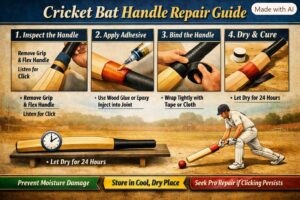
Step‑by‑Step Process
- Clean the area: Remove dust and debris from the joint.
- Apply adhesive:
- Use a syringe to inject glue into the gap.
- Avoid excess — too much glue stiffens the handle.
- Bind tightly:
- Wrap the handle with electrical tape or cloth binding.
- Keep the bat horizontal while drying.
- Dry for 24 hours: Allow the adhesive to cure fully.
- Re‑grip and test: Replace the grip and tap the bat gently to check for noise.
If the clicking persists, the internal cane may have separated — requiring professional attention.
🧠 Physics Behind Handle Clicking
The click occurs when two bonded surfaces move independently under stress.
- The cane rods flex during impact.
- The adhesive joint fails to hold them perfectly.
- The resulting micro‑movement produces an audible click.
This doesn’t always mean structural failure, but it indicates loss of uniform tension in the handle.
🧾 Professional Repair Techniques
Bat makers use specialized methods to restore handle integrity:
- Re‑splicing: Removing and re‑gluing the handle joint.
- Re‑binding: Wrapping new twine under tension.
- Cane replacement: Installing new cane rods if broken.
- Handle replacement: For severe internal damage.
Professional repairs ensure the bat retains its original balance and rebound.
🧴 Preventive Maintenance
- Store in a dry environment: Avoid damp rooms or car trunks.
- Oil the blade, not the handle: Excess oil weakens glue.
- Replace grips regularly: Maintain even pressure on the handle.
- Avoid over‑tight binding: It can strain the splice joint.
Routine care prevents moisture damage and prolongs handle life.
🧠 Signs You Need Immediate Repair
| Symptom | Possible Cause | Action |
|---|---|---|
| Clicking sound | Loose joint | Apply glue or re‑bind |
| Handle movement | Cane separation | Professional re‑splicing |
| Vibration during shots | Rubber insert failure | Replace handle |
| Visible crack near splice | Structural damage | Seek expert repair |
Ignoring these signs can lead to complete handle breakage.
🏏 Impact on Performance
A clicking handle affects:
- Shot timing: Delayed rebound reduces power.
- Control: Handle flex feels inconsistent.
- Confidence: Distracting sound during play.
Fixing the issue restores the bat’s natural rhythm and responsiveness.
🧬 Material Insights: Cane vs Composite Handles
- Cane handles: Traditional, flexible, and responsive — prone to clicking if glue loosens.
- Composite handles: Use carbon or fiberglass inserts — less likely to click but stiffer in feel.
Cane remains preferred for its natural shock absorption and classic feel.
🧠 Environmental Factors
- Humidity: Expands cane and rubber.
- Heat: Dries glue and weakens bonds.
- Cold: Makes rubber brittle.
Store your bat between 18–25 °C with 50–60 % humidity for optimal preservation.
🧾 Testing After Repair
After fixing the handle:
- Tap the bat gently on a ball.
- Listen for any residual clicking.
- Check balance and pickup.
- Swing naturally — ensure smooth flex.
If the sound persists, repeat adhesive application or consult a bat maker.
🧠 Psychological Comfort and Confidence
A silent, solid handle builds trust. Players often describe the repaired bat as “alive again.” Confidence in equipment directly translates to better performance and focus.
🏁 Conclusion: Restore the Heart of Your Bat
A clicking handle is a minor issue but signals internal stress. Fixing a clicking handle promptly — through careful adhesive application or professional re‑splicing — restores your bat’s balance, feel, and longevity.
Regular maintenance, proper storage, and attentive care ensure your bat remains silent, strong, and ready for every innings.