
Every cricket bat develops cracks. In fact, small surface cracks are a normal part of an English willow bat’s life. Yet many players panic the moment they see a grain crack appear on the face of the blade. Ironically, the cracks that worry players the most are often harmless, while the truly dangerous damage frequently remains hidden inside the bat.
One of the most serious but least understood threats to cricket bats is internal wood rot. Unlike ordinary wear and tear, internal rot weakens the willow from the inside out. By the time clear symptoms appear, the structural integrity of the bat may already be severely compromised.
Learning to distinguish between normal grain cracking and genuine internal deterioration can help players avoid expensive replacements and identify problems before a bat becomes unusable.
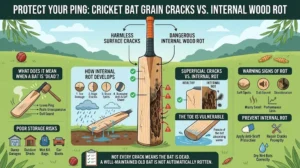
What Does It Mean When a Cricket Bat Is “Dead”?
Players often describe a bat as dead when it:
- Loses its ping
- Feels unresponsive
- Produces poor rebound
- Generates less power
- Sounds dull during impact
However, a dead bat is not always rotten.
Performance loss can occur because of:
- Natural aging
- Excessive use
- Poor pressing
- Surface damage
- Internal moisture problems
- Wood rot
Understanding the cause is essential before deciding whether a bat can be repaired.
What Is Internal Wood Rot?
Internal wood rot occurs when moisture becomes trapped within the willow for extended periods.
Over time, excess moisture can encourage biological deterioration inside the wood structure.
This process weakens:
- Cell walls
- Fiber strength
- Structural stability
- Energy transfer
Unlike surface cracks, rot attacks the core strength of the willow.
How Internal Rot Develops
English willow is highly sensitive to moisture.
Water commonly enters through:
✅ The toe
✅ Edge cracks
✅ Grain splits
✅ Damaged anti-scuff sheets
✅ Poorly sealed surfaces
Once moisture becomes trapped, the internal environment can remain damp for long periods.
Repeated wetting and drying cycles may accelerate deterioration.
The Role of Poor Storage
Improper storage is one of the biggest causes of internal bat damage.
Problematic storage locations include:
Damp Garages
Moisture levels often fluctuate dramatically.
Outdoor Sheds
Temperature swings increase condensation risks.
Wet Kit Bags
A damp bag can trap humidity around the bat for days.
Car Boots
Heat and moisture variations can stress the willow.
Many bats suffer long-term damage not during matches, but while sitting in storage.
Superficial Grain Cracks vs Internal Rot
Understanding the difference is critical.
Harmless Surface Grain Cracks
Surface cracks are extremely common.
Characteristics include:
✅ Follow natural grain lines
✅ Appear on the bat face
✅ Usually narrow
✅ Limited depth
✅ Stable over time
These cracks are often cosmetic.
Most quality bats develop them eventually.
They do not automatically indicate serious damage.
Warning Signs of Internal Rot
Rot produces a very different set of symptoms.
Potential indicators include:
❌ Soft spots
❌ Spongy feel
❌ Dull sound
❌ Discoloration
❌ Musty smell
❌ Unusual performance loss
Unlike superficial cracking, these symptoms suggest deeper structural issues.
The Sound Test
One of the simplest diagnostic tools is sound.
Gently tap different parts of the bat using:
- A ball
- A mallet
- Another bat
A healthy bat normally produces:
✅ Sharp sound
✅ Consistent response
✅ Clear rebound tone
A bat suffering internal deterioration may sound:
❌ Flat
❌ Dull
❌ Hollow
❌ Inconsistent
Changes in acoustics often reveal structural problems before they become visually obvious.
Checking for Soft Areas
Healthy willow should feel firm.
Run your fingers across:
- Face
- Edges
- Toe
Be alert for:
❌ Localized softness
❌ Excessive compression
❌ Spongy sections
❌ Unusual flexibility
Soft spots frequently indicate underlying moisture issues.
Discoloration Warning Signs
Rot often changes the wood’s appearance.
Look for:
Dark Staining
Particularly around cracks.
Grey Patches
May indicate prolonged moisture exposure.
Unnatural Color Changes
Especially near the toe.
Not every discoloration is rot, but unusual staining deserves investigation.
Why the Toe Is Most Vulnerable
The toe is often the first area affected.
This occurs because:
- It contacts damp grass
- Moisture enters through end grain
- Water absorption is highest here
A neglected toe can gradually absorb moisture over months or years.
This is one reason toe guards have become increasingly popular.
The Smell Test
A healthy cricket bat generally smells like:
- Fresh wood
- Willow
- Oil
- Natural timber
Rotting wood may develop:
❌ Damp smell
❌ Musty odor
❌ Mold-like scent
A strong smell can indicate trapped moisture and ongoing deterioration.
When Performance Starts to Drop
One of the clearest signs of internal issues is unexplained performance decline.
The bat may:
- Feel slower
- Produce less rebound
- Lose responsiveness
- Generate weaker shots
If visible condition appears fine but performance drops significantly, internal damage may be responsible.
Common Causes of Internal Rot
Playing with a Wet Bat
Moisture absorbed during wet conditions may become trapped inside.
Poor Drying Practices
Leaving a damp bat inside a closed bag creates ideal conditions for moisture retention.
Long-Term Humidity Exposure
High humidity environments can damage willow gradually.
Untreated Toe Damage
A damaged toe allows water to penetrate deeply into the bat.
Ignored Cracks
Cracks that remain unrepaired often become moisture entry points.
Can Internal Rot Be Repaired?
The answer depends on severity.
Early Moisture Damage
Sometimes manageable through:
- Drying
- Repairs
- Protective treatments
Advanced Rot
Much more difficult.
Once fiber integrity has significantly deteriorated, complete restoration is rarely possible.
The structural damage is often permanent.
See More: Smart Cricket Bats: How Embedded IoT Sensors Track Every Swing
How to Prevent Internal Rot
Use a Toe Guard
One of the best moisture barriers available.
Apply Anti-Scuff Protection
Helps reduce moisture penetration through the face.
Store Properly
Keep bats in:
✅ Dry environments
✅ Stable temperatures
✅ Well-ventilated areas
Repair Cracks Promptly
Even small cracks can allow moisture entry.
Dry Wet Bats Correctly
If a bat becomes wet:
- Remove surface moisture
- Store indoors
- Allow natural drying
- Avoid direct heat
Quick Inspection Checklist
Ask yourself:
Sound
✅ Crisp and lively?
Feel
✅ Firm and solid?
Appearance
✅ No unusual discoloration?
Smell
✅ Fresh timber smell?
Performance
✅ Strong rebound and ping?
If several answers are “no”, further inspection may be required.
Common Myth: Every Old Bat Is Rotten
This is false.
Many bats remain highly effective for years.
A well-maintained older bat may outperform a newer bat with internal moisture damage.
Age alone does not determine bat health.
Condition matters far more.
When Is It Time to Retire a Bat?
Unfortunately, some bats eventually reach the end of their life.
Signs include:
❌ Extensive internal softness
❌ Major structural instability
❌ Significant performance loss
❌ Widespread rot
❌ Multiple failing repairs
At that stage, replacement may be safer and more economical.
Final Thoughts
Not every crack means your cricket bat is dead. Surface grain cracks are a normal consequence of using English willow and are often little more than cosmetic wear. Internal wood rot, however, is a far more serious issue. Caused by trapped moisture, poor storage habits, wet playing conditions, or neglected damage, rot weakens the willow from within and can dramatically reduce performance, durability, and structural integrity.
The key is learning to look beyond the surface. A healthy bat should feel firm, sound lively, and deliver consistent rebound. Soft spots, discoloration, musty odors, and dull performance are far stronger warning signs than ordinary grain cracks. By protecting your bat from moisture, storing it correctly, and addressing damage early, you can often prevent internal deterioration and extend the life of your willow for many seasons to come. 🏏
See More: Is my Cricket Bat Broken? Bat Repair Guide