
Protective face covers — commonly known as anti‑scuff sheets — are thin films applied to the front of a cricket bat to protect the willow from surface damage, moisture, and cracking. While they’re widely used at all levels, the legality and material restrictions differ between professional and amateur cricket under MCC Law 5 and ICC equipment regulations.
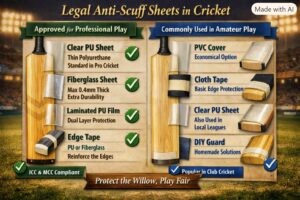
⚖️ Professional Cricket Regulations
In international and first‑class cricket, the MCC and ICC enforce strict standards to ensure that protective covers do not alter the bat’s performance or exceed legal dimensions.
✅ Permitted Materials
| Type | Description | Legality |
|---|---|---|
| Clear Polyurethane (PU) Sheet | Transparent, flexible film that prevents surface cracks and moisture absorption. | ✅ Fully legal — standard in professional play. |
| Fiberglass Sheet | Thin woven layer offering extra durability against fast bowling. | ✅ Legal if thickness does not exceed 0.015 in (0.4 mm). |
| Laminated PU Film | Dual‑layer PU with adhesive backing for extended protection. | ✅ Legal — used by major bat manufacturers. |
| Edge Tape (Fiberglass or PU) | Reinforces edges without affecting rebound. | ✅ Legal — must not alter bat profile. |
🚫 Prohibited Materials
| Type | Reason for Ban |
|---|---|
| Carbon Fiber or Kevlar Film | Alters rebound and violates the “wood‑only” blade rule. |
| Metallic or Reflective Sheets | Can interfere with ball visibility and umpire judgment. |
| Thick Plastic Laminates | Can increase bat depth beyond the 67 mm limit. |
Professional bats are inspected using a bat gauge to ensure that any protective layer does not push the bat beyond legal thickness or width.
🏏 Amateur and Club Cricket Regulations
Amateur leagues and club cricket follow more flexible guidelines, focusing on safety and affordability rather than strict measurement enforcement.
✅ Commonly Allowed Materials
| Type | Usage Notes |
|---|---|
| PU or Fiberglass Sheets | Widely accepted; easy to apply and replace. |
| PVC Film (Budget Option) | Legal in most local leagues; slightly heavier but inexpensive. |
| Edge Tape or Cloth Tape | Common DIY protection; legal if not excessive. |
⚠️ Recommended Practices
- Keep the sheet thin and apply it evenly to avoid altering bat balance.
- Avoid colored or textured films that could obscure the ball’s seam visibility.
- Replace damaged sheets promptly to prevent moisture trapping.
🧠 Performance and Maintenance Insights
- Anti‑scuff sheets reduce surface wear and extend bat life.
- They do not replace oiling — always apply raw linseed oil before fitting.
- Professional players often combine PU sheets + edge tape + toe guard for full protection.
🪵 Impact on Bat Feel and Rebound
The thickness and texture of the sheet can slightly affect how the ball feels off the bat.
- Thin PU sheets maintain natural rebound and sound.
- Fiberglass layers add stiffness, ideal for fast bowlers.
- PVC films may dull the “ping” but offer strong protection for practice bats.
Professional players often test multiple sheet types to find the right balance between feel and durability.
🧾 Manufacturer Compliance and Branding Rules
- All branded bats must declare sheet material and thickness.
- ICC‑approved manufacturers (Gray‑Nicolls, Kookaburra, CA, MRF, etc.) use certified PU films.
- Logos or branding printed on sheets must not exceed 50 mm × 100 mm area.
- Any modification after sale that changes bat dimensions voids certification.
Environmental and Sustainability Considerations
Modern bat makers are shifting toward eco‑friendly PU films and biodegradable adhesives.
- Reduces plastic waste from frequent replacements.
- Maintains transparency and flexibility.
- Some brands now offer recyclable anti‑scuff sheets for club players.
🏁 Conclusion:
In summary:
- Professional cricket demands PU or fiberglass sheets within strict thickness limits.
- Amateur cricket allows PVC or cloth alternatives as long as they don’t distort the bat’s dimensions.
- The golden rule: protect the willow, not modify its performance.
See More: Strict Legal Dimensions of a Cricket Bat