
Few cricket bat maintenance topics generate more debate than protective tape. Walk into any professional dressing room or club cricket pavilion and you’ll see bats covered with anti-scuff sheets, fiberglass edge tape, toe guards, and various forms of protective coverings. Some players swear by them, claiming they dramatically extend bat lifespan. Others worry that covering the willow reduces responsiveness and “kills the ping” that makes a good bat special.
The truth lies somewhere between these extremes.
Protective tape can significantly improve durability and reduce certain types of damage. Still, improper application or excessive layering can affect how a bat feels and performs—understanding how these products work helps players make informed decisions rather than relying on myths and assumptions.
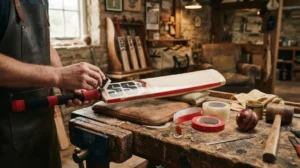
What Is Protective Tape?
Protective tape refers to various transparent or reinforced coverings applied to a cricket bat.
Common examples include:
- Anti-scuff sheets
- Fiberglass edge tape
- Clear protective film
- Specialized face tape
- Toe protection tape
The goal is simple:
Protect the willow from damage while preserving performance.
Most modern anti-scuff sheets are thin transparent films applied directly to the face of the bat.
Once installed, they are often barely visible.
Why Cricket Bats Need Protection
English willow is remarkably effective for cricket bats because it combines:
- Light weight
- Flexibility
- Shock absorption
- Excellent rebound
However, willow remains a natural material.
As a result, it is vulnerable to:
- Surface cracking
- Seam marks
- Edge damage
- Moisture intrusion
- Grain lifting
Even premium Grade 1+ willow can suffer damage when repeatedly struck by hard cricket balls.
Protective coverings help reduce these risks.
The Most Common Forms of Bat Damage
Understanding typical bat damage explains why protection has become so popular.
Surface Cracks
Small cracks often develop along the grain lines.
These cracks are usually cosmetic initially.
However, they can expand with continued use.
Grain Lifting
Repeated impacts can lift grain fibers.
This creates roughness and weakens the face.
Edge Damage
Modern cricket bats often feature large edges.
While excellent for performance, these edges remain vulnerable.
Mishits frequently strike edge areas at awkward angles.
Toe Swelling
Moisture entering through the toe can cause swelling and deterioration.
This is particularly common on damp outfields.
Advantages of Protective Tape
Increased Surface Protection
The primary benefit is straightforward.
Protective tape absorbs some of the stress generated during impact.
Benefits include:
✅ Reduced surface wear
✅ Better grain stability
✅ Lower risk of superficial cracking
✅ Enhanced face protection
For players who train regularly, these advantages can be substantial.
Reduced Grain Lifting
Grain lifting is one of the most common forms of early bat damage.
An anti-scuff sheet acts as a protective layer between the ball seam and the willow.
This helps keep grain fibers intact.
Benefits:
- Cleaner appearance
- Improved durability
- Reduced maintenance
Longer Bat Lifespan
Every cricket ball impact stresses the willow.
Protective coverings help distribute some of this stress.
As a result:
✅ Surface deterioration slows
✅ Minor damage remains manageable
✅ The bat may remain match-ready longer
For expensive English willow bats, this protection often provides excellent value.
Better Edge Protection
Fiberglass edge tape can provide additional reinforcement around vulnerable areas.
This is especially useful for:
- Aggressive players
- Junior cricketers
- New bats
Edge protection often prevents small cracks from developing into major repairs.
Improved Resistance to Moisture
Some protective products help reduce moisture penetration.
Benefits include:
✅ Better environmental protection
✅ Reduced swelling risk
✅ Greater stability
This becomes particularly valuable during wet seasons.
See More: Cricket Bat Brand Comparisons: Kookaburra vs Gray-Nicolls vs SS vs Gunn & Moore
The Main Concern: Does Tape Kill the Ping?
This is the most common question among batters.
The short answer:
Usually No
When properly applied, a modern anti-scuff sheet generally has minimal effect on bat performance.
Most quality sheets are extremely thin.
The energy transferred from bat to ball remains largely unchanged.
Many professional players use anti-scuff protection without sacrificing performance.
Why the Myth Exists
The misconception often arises because players notice a difference in sound.
Sound vs Performance
The “ping” players hear and the actual rebound of the bat are not always identical.
Adding a protective layer may:
- Slightly alter sound frequencies
- Reduce some vibration noise
- Change acoustic feedback
The bat may sound different.
However, the ball can still leave the bat with identical speed.
Many players confuse changes in sound with changes in performance.
Can Tape Affect Ping at All?
In certain situations, yes.
Excessive Layering
Problems arise when players apply:
- Multiple anti-scuff layers
- Thick fiberglass coverings
- Heavy protective products
Too much material creates a cushioning effect.
This may reduce responsiveness slightly.
Poor-Quality Protection
Cheap products sometimes use thicker materials or inferior adhesives.
Potential consequences:
- Excess weight
- Reduced feel
- Altered balance
Quality matters.
Multiple Repairs
A heavily repaired bat covered with multiple tapes, edge guards, and reinforcement materials may eventually feel less lively.
In such cases, the issue is not the tape itself but the accumulation of protective materials.
Anti-Scuff Sheets vs Bare Willow
Anti-Scuff Sheet
Advantages:
✅ Better durability
✅ Reduced cracking
✅ Improved grain protection
✅ Longer lifespan
Disadvantages:
❌ Slightly altered sound
❌ Difficult to inspect grain underneath
Bare Willow
Advantages:
✅ Traditional feel
✅ Direct visual inspection
✅ Original acoustic response
Disadvantages:
❌ More vulnerable to damage
❌ Increased maintenance
❌ Higher cracking risk
For most players, the durability benefits outweigh the small differences.
When Protective Tape Helps Most
Brand-New Bats
Fresh willow remains vulnerable.
Applying protection early often prevents future problems.
Soft Grade 1 Willow
Premium willow can be particularly susceptible to grain lifting.
Protection is often highly beneficial.
Junior Cricket
Young players frequently mishit the ball.
Extra protection can significantly extend bat life.
Heavy Training Schedules
Players facing thousands of practice deliveries place enormous stress on their equipment.
Protective tape helps preserve performance.
Situations Where Protection Is Less Important
Some players may choose minimal protection if:
- They rarely play
- They enjoy maintaining bare willow
- They prefer traditional aesthetics
However, most bat makers still recommend some level of face protection.
Common Mistakes When Applying Tape
Trapping Air Bubbles
Air pockets create uneven protection and an unattractive finish.
Applying to Dirty Surfaces
Dirt and oil reduce adhesion.
Covering Existing Damage
Tape should not replace proper repairs.
Using Multiple Layers
More protection is not always better.
Excessive layering may affect feel and balance.
Professional Players and Protective Tape
Many elite cricketers use:
- Anti-scuff sheets
- Edge tape
- Toe guards
The misconception that professionals always use bare willow is inaccurate.
Top-level players invest heavily in protecting expensive bats.
Their goal is maintaining performance as long as possible.
Anti-Scuff Sheets vs Fiberglass Tape
Anti-Scuff Sheets
Best for:
✅ Face protection
✅ Grain preservation
✅ General durability
Fiberglass Tape
Best for:
✅ Edge reinforcement
✅ Crack prevention
✅ Structural support
Many players combine both approaches for maximum protection.
The Ideal Balance
The best setup generally includes:
- One quality anti-scuff sheet
- Sensible edge protection if required
- Proper knocking-in
- Regular maintenance
This combination preserves performance while reducing wear.
Final Verdict
Protective tape remains one of the most effective and inexpensive ways to extend the life of a cricket bat. Quality anti-scuff sheets help prevent grain lifting, reduce surface cracking, improve moisture resistance, and protect expensive willow from everyday wear and tear. For most players, especially those using English willow bats, the benefits far outweigh any potential drawbacks.
As for the question that concerns most batters, properly applied protective tape does not meaningfully “kill the ping” of a cricket bat. While it may alter the sound or feel slightly, the actual performance impact is typically negligible. Problems generally arise only when excessive layers, poor-quality materials, or multiple reinforcements are used. In moderation, protective tape allows players to enjoy the responsiveness of their bat while preserving its condition for longer.
Ultimately, a well-protected bat that retains its structural integrity for multiple seasons is often a better performer than an unprotected bat that develops cracks, grain lifting, and early deterioration. The key is balance: protect the willow without smothering it.
See More: Junior Cricket Bat Sizing Matrix: Age & Height Bat Size Guide