
For centuries, the phrase “the sound of leather on willow” has defined the spirit of cricket. At the heart of that tradition lies English willow (Salix alba caerulea), a unique timber renowned for its lightweight structure, strength, shock absorption, and ability to produce the world’s finest cricket bats. Yet today, this treasured natural resource faces increasing pressure from climate change, environmental uncertainty, and rising global demand.
As weather patterns become less predictable and long-term forestry planning grows more challenging, growers, estates, and bat manufacturers across Britain are adapting their practices to ensure that future generations of cricketers can continue to enjoy bats made from premium English willow. The future of sustainable willow is no longer simply about growing trees. It is about climate resilience, biodiversity, responsible land management, and innovation throughout the supply chain.
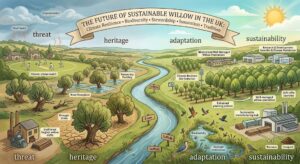
The Importance of English Willow
English willow occupies a unique position within world sport. Unlike many sporting materials that can be manufactured synthetically, elite cricket bats still rely heavily on naturally grown willow timber.
English willow is primarily cultivated in low-lying river valleys throughout southern and eastern England, particularly in regions such as Essex, Suffolk, Kent, Oxfordshire, and parts of the Thames Valley. These locations provide the fertile soils and reliable moisture levels that willow trees require to develop their trademark straight grain and high-quality timber.
A cricket bat willow tree typically takes between 12 and 18 years to reach harvest maturity, making it one of the longest-term agricultural investments in British forestry. Growers must therefore make decisions today based on environmental conditions that could be significantly different more than a decade from now. This long growing cycle makes willow particularly vulnerable to climate-related changes.
Climate Change Is Reshaping Willow Growing Conditions
The UK’s climate is changing in several important ways. Warmer average temperatures, more frequent droughts, heavier rainfall events, flooding, and shifting seasonal patterns are affecting forests and agricultural systems nationwide. Willow plantations are no exception.
While willow is generally considered a moisture-loving species, extreme weather events can create conditions that stress trees and reduce timber quality.
Rising Temperatures
Average temperatures across Britain have risen significantly over recent decades. While a slightly warmer climate can extend growing seasons, excessive heat can also place trees under physiological stress.
Young willow saplings are especially vulnerable during prolonged periods of hot weather. High temperatures increase water demand and can lead to reduced growth rates if soil moisture becomes insufficient. Over time, repeated heat stress may influence timber formation, resulting in lower-quality wood suitable for fewer premium-grade bats.
For an industry dependent on producing straight-grained, defect-free timber, even minor changes in growth conditions can have significant economic consequences.
Drought and Water Stress
One of the most pressing concerns for willow growers is drought.
Traditionally, cricket bat willow thrives in river floodplains and areas with naturally high water tables. However, increasingly dry summers and reduced soil moisture levels have begun challenging this historical growing model.
Extended drought periods can:
- Slow annual growth
- Reduce trunk diameter expansion
- Increase susceptibility to pests and disease
- Lower the percentage of premium-grade timber
The challenge is particularly serious because weather extremes are becoming more frequent. Trees may experience several consecutive years of suboptimal moisture conditions during critical development stages.
Since producing a single cricket bat requires exceptional timber quality rather than simply large quantities of wood, climate-induced reductions in quality can be more damaging than reductions in overall yield.
Flooding and Extreme Rainfall
While drought represents one threat, excessive rainfall creates another.
Climate scientists increasingly report a trend toward more intense rainfall events. Large volumes of water falling over short periods can cause flooding, soil erosion, root damage, and instability in plantation landscapes.
Although willow naturally tolerates wet conditions better than many tree species, prolonged flooding can:
- Damage root systems
- Limit oxygen availability in soils
- Increase disease pressure
- Affect long-term plantation productivity
The challenge facing growers is not merely wetter or drier conditions, but greater variability between extremes.
Emerging Pest and Disease Risks
Changing climate conditions can alter the distribution and activity of pests, fungal pathogens, and invasive species.
Warmer winters may allow certain insects and diseases to survive and spread more effectively. Trees already weakened by drought or flooding become more susceptible to infestation and infection.
For willow growers, disease management is becoming increasingly important because any defect in timber quality can significantly reduce the value of harvested trees.
Forestry experts believe that resilience against future pest pressures will depend on careful monitoring, genetic diversity, and improved plantation management practices.
The Long Supply Chain Challenge
Unlike annual crops, willow cannot be quickly replaced when shortages occur.
If climate change reduces planting rates or damages young plantations today, the consequences may not become fully visible for another decade or more. This creates a unique challenge for cricket bat manufacturers.
A shortage of suitable willow cannot simply be solved by increasing production next season. Trees harvested in the future must be planted and managed years beforehand.
This long-term perspective explains why many industry stakeholders are investing heavily in sustainability initiatives today.
See More: Lightweight vs Heavyweight Cricket Bats
Growing Global Demand
Climate pressures are arriving just as global cricket participation continues to expand.
The sport is experiencing growth in established cricket nations and emerging markets alike. More players inevitably create greater demand for cricket bats, particularly high-quality English willow bats.
Manufacturers therefore face a double challenge:
- Protect future willow supplies from climate-related risks.
- Meet growing international demand without overexploiting natural resources.
This reality has accelerated investment in sustainable forestry programmes throughout the UK.
How Manufacturers and Growers Are Responding
The good news is that the English willow industry is not standing still. Across Britain, growers, forestry specialists, and bat manufacturers are implementing strategies designed to ensure long-term sustainability.
Expanding Willow Plantations
Many organizations are actively encouraging landowners to establish new willow plantations.
Companies specializing in cricket bat willow cultivation are partnering with farmers and estates to convert suitable low-lying land into productive willow-growing areas. These programmes help create a larger future resource base while diversifying income for landowners.
By increasing planting today, the industry aims to strengthen future supplies and reduce vulnerability to localized climate impacts.
Sustainable Replanting Programmes
Leading growers increasingly follow harvest-and-replant models.
Rather than treating willow as a finite resource, harvested areas are routinely replanted with young trees. This ensures continuous regeneration of the resource and supports a sustainable production cycle.
Replanting also provides opportunities to introduce improved planting designs and climate-resilient cultivation methods.
Enhanced Plantation Management
Modern willow cultivation involves far more than planting trees and waiting for them to mature.
Specialist forestry companies now provide:
- Regular pruning
- Tree health inspections
- Pest monitoring
- Plantation maintenance
- Managed harvesting programmes
These interventions improve timber quality and help trees cope with environmental stressors.
Selecting Climate-Resilient Sites
Growers are placing greater emphasis on selecting locations capable of withstanding changing weather patterns.
Many plantations continue to be concentrated near rivers and floodplains where natural moisture availability remains relatively reliable. Land suitability assessments increasingly consider future climate scenarios in addition to current growing conditions.
This long-term planning helps ensure that plantations established today remain viable throughout their entire growth cycle.
Supporting Biodiversity
One of the most encouraging developments in modern willow cultivation is the integration of biodiversity goals.
Willow plantations can provide valuable habitats for birds, insects, pollinators, and other wildlife. Many growers now view sustainable willow production as part of broader environmental stewardship efforts.
Organizations promoting willow cultivation frequently highlight benefits including:
- Carbon sequestration
- Habitat creation
- Improved water management
- Support for wildlife corridors
- Enhanced landscape diversity
These environmental benefits strengthen the case for expanding willow cultivation as part of wider sustainability strategies.
Innovation Across the Supply Chain
Manufacturers are also becoming more efficient in their use of willow.
Historically, lower-grade timber often had limited commercial value. Today, advances in processing, grading, and manufacturing allow more of each harvested tree to be utilized effectively.
Many businesses are also working to reduce waste generated during harvesting and production. Some suppliers have established partnerships to convert by-products into chips, biomass, or other useful materials rather than sending them to landfill or burning them unnecessarily.
These improvements increase resource efficiency and reduce pressure on future timber supplies.
See More: The Role of Carbon Fiber in Modern Cricket Bat Handles
The Role of Research and Development
Researchers, forestry specialists, and manufacturers increasingly recognize that future sustainability depends on innovation.
Areas of ongoing interest include:
- Improved willow genetics
- Disease-resistant planting material
- Climate adaptation strategies
- Precision plantation management
- Alternative growing systems
Some researchers are even exploring complementary materials and sustainable bat technologies to help reduce long-term supply pressures on willow resources.
While English willow remains the gold standard for professional cricket bats, scientific research is helping the industry prepare for future environmental challenges.
A Sustainable Future for Willow
The future of English willow will depend on adaptation.
Climate change is introducing new risks to one of Britain’s most iconic forestry resources. Hotter summers, drought, flooding, pest pressure, and long-term uncertainty challenge growers and manufacturers. Yet the industry is responding with remarkable foresight.
Expanded planting programmes, sustainable harvesting practices, biodiversity initiatives, improved plantation management, and long-term investment in climate resilience are helping secure the future of English willow. Across the UK, growers and manufacturers are working together to ensure that the next generation of cricket bats can still be crafted from responsibly grown British timber.
The story of sustainable willow is ultimately one of stewardship. By protecting landscapes today and planning decades, the industry is demonstrating that environmental responsibility and sporting tradition can grow side by side. If these efforts continue, English willow will remain not only a symbol of cricket’s heritage but also an example of how sustainable forestry can thrive in a changing climate.